
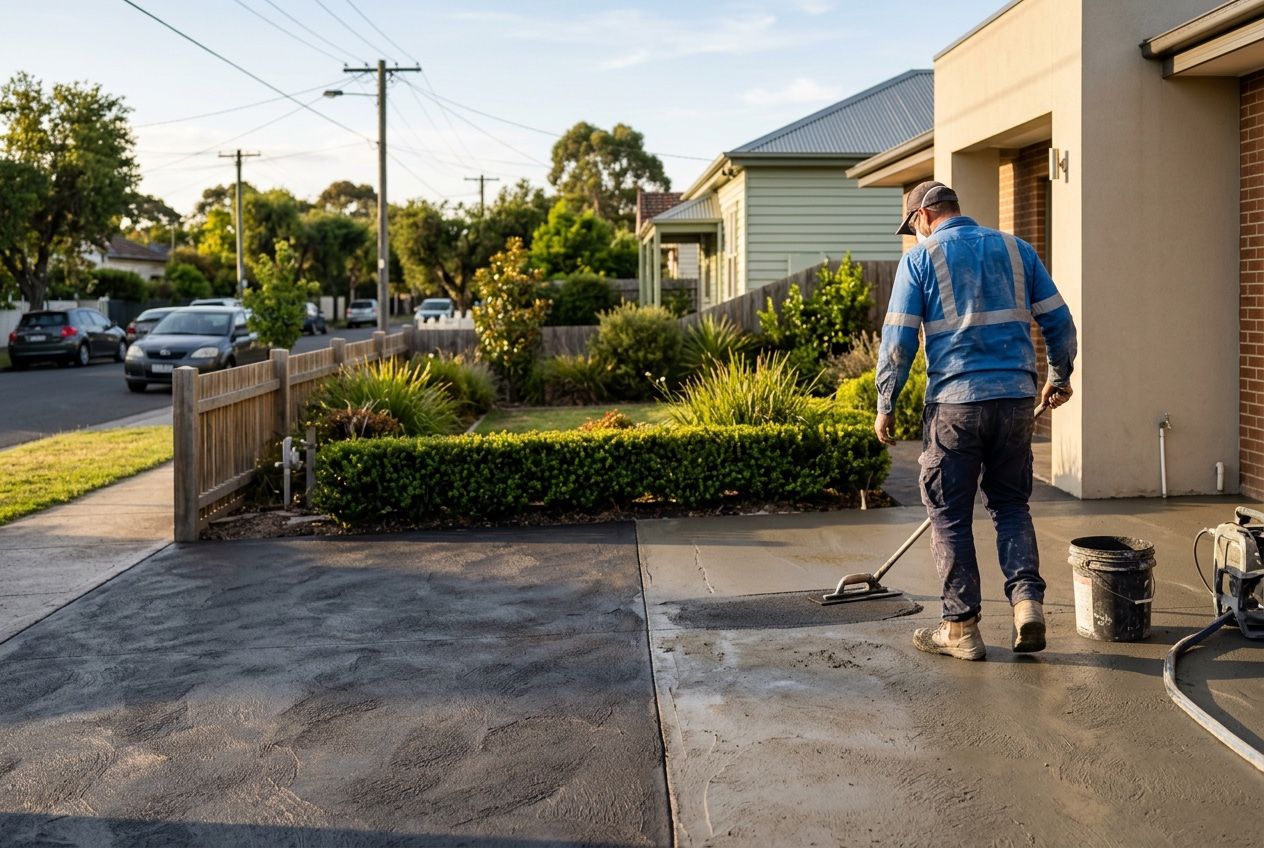
coloured and stamped concrete
Colour without the stone texture, through the slab or stamped into it.
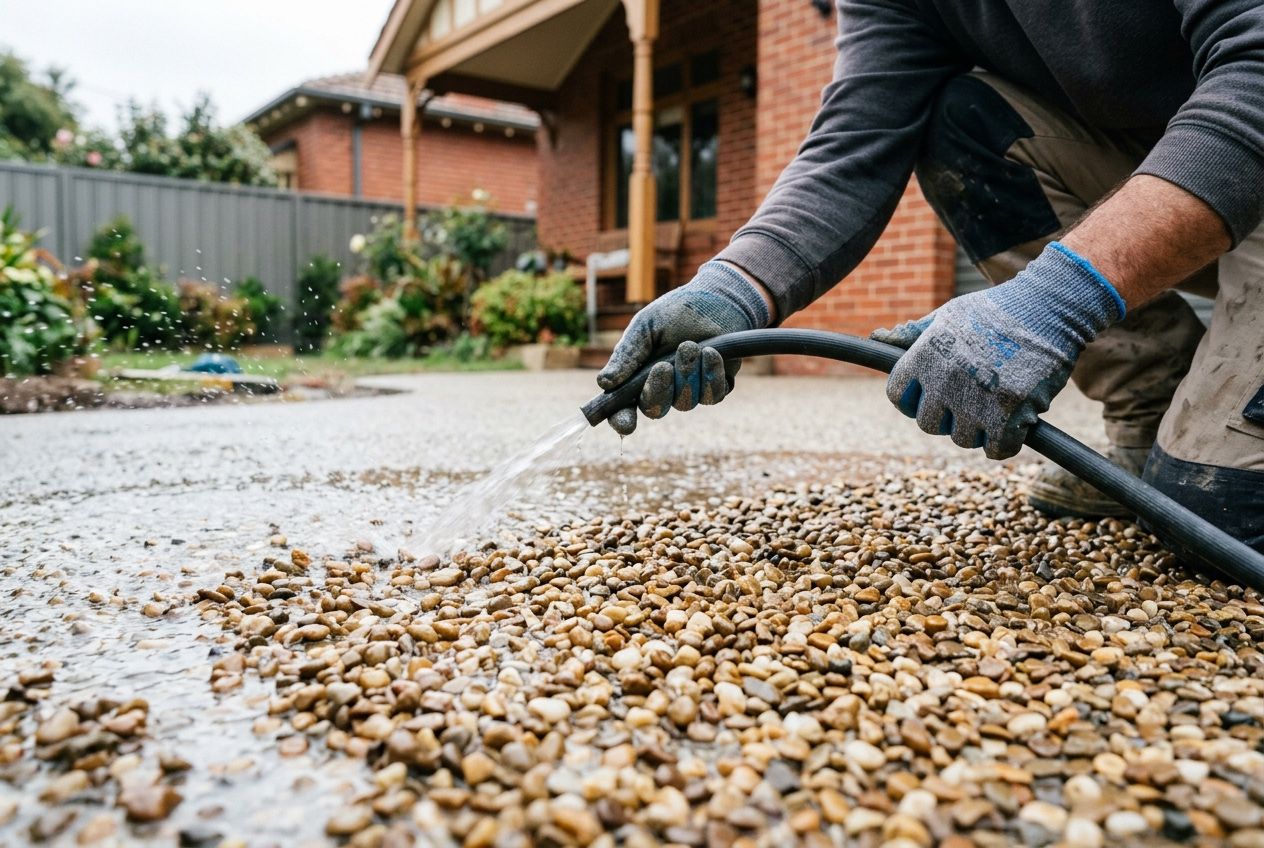
Exposed aggregate concrete gives Melbourne homes a stone-textured surface that wears daily traffic without showing it, quoted and poured at houses across the inner north. It's the decorative finish clients ask for by name, and this page covers the blends, the sealing and where it works best.
Residential work across Melbourne's inner north.
Exposed aggregate concrete is concrete poured with decorative stone through the mix, with the thin top layer of cement paste washed off before full cure so the stone sits at the surface. Homeowners choose exposed aggregate for three practical reasons: the stone texture is slip-resistant underfoot, it hides dirt and tyre marks far better than a flat grey slab, and it lifts a frontage the way pavers do without the joints. The stone does the decorating, so no two blends read quite the same, and the finish belongs equally on driveways, paths and pool surrounds. On price it sits above plain concrete and below high-end stone paving; the pricing section further down puts numbers on that.
An exposed aggregate driveway is where most people meet this finish: a big, visible surface that justifies the upgrade every time you pull in. If the budget says no, a broom-finished pour keeps the grip without the stone, and concrete driveways compares every driveway surface side by side.
On front paths and porch steps the texture pays for itself each wet winter, and running one blend across path and driveway ties the whole frontage together. Concrete paths covers those smaller pours.
Exposed aggregate pool surrounds are chosen for grip where it matters most, under wet bare feet. Pool jobs usually run smaller, rounded stone blends: comfortable to walk on, still nothing like slick.
Exposed aggregate colours come from two things at once: the stone in the mix and the cement base around it. The blend families most Melbourne clients pick between:
Suppliers name and cycle their decorative ranges, so the real decision happens over current colour charts and physical stone samples at quote stage, not from a website list. Seeing the actual blend wet and dry, in your own light, is worth more than any photo of it.
Sealing is standard practice on exposed aggregate because the washed stone surface is more porous than a steel-trowelled slab. A penetrating or film-forming sealer deepens the stone colour, sheds oil before it soaks in and cuts staining, which matters on a surface cars live on. Reseal timing depends on traffic, sun and the sealer used; no single interval is worth promising, and the concreter will suggest one for your surface when the job is done. Day-to-day care is simpler than people expect: a hose-off does most of it, with an occasional gentle detergent wash for whatever the hose leaves behind.
A full-depth exposed aggregate pour needs the old slab out first, but overlay and spray-on systems can put the look over sound existing concrete. Which route makes sense follows the slab's condition, and that call gets made at the site measure, where the concreter checks the existing surface in person. If it's cracked, drummy or moving, removal is the honest path: concrete removal and replacement covers taking it out and pouring new. If the slab is solid and only the surface is tired, an overlay through concrete resurfacing gets the aggregate look without demolition money. Either way this stays residential work: homes and residential investment properties only.
Colour charts and stone samples first, so the mix is locked before anything is booked.
Base, formwork and mesh: the same bones as any quality slab.
, using the chosen decorative mix.
applied across the fresh surface. It holds the top layer of cement paste soft while the slab beneath firms up.
Too early drags stone out; too late and the paste sets over it. Hitting that window evenly is the craft step, and it's why this finish is not a DIY weekend job.
Most residential jobs run pour day plus a return visit to seal once cured.
Exposed aggregate concrete costs more per square metre than plain grey, typically $85 to $150 in Melbourne with premium blends running higher, going by published Australian concreting cost guides, compiled July 2026. The gap comes from the decorative mix itself plus the extra finishing labour, the retarder-and-wash step a plain pour never needs, and blend choice moves it too: common local stone costs less than premium quartz mixes. Those are typical Melbourne prices incl. GST, not a quote for your job. The line items live in the concrete driveway cost guide, which prices exposed aggregate against every other driveway finish, and concrete cost per m2 covers rates for paths, patios and slabs as well.
Yes, typically. The decorative stone mix costs more than a standard batch, and exposing it adds labour a plain pour skips: the retarder, the timed wash-off and the sealing. Expect it in the upper half of Melbourne's typical $65 to $150 per square metre concreting band, where plain grey holds the bottom; the driveway cost guide has the finish-by-finish table.
Exposed aggregate concrete comes in cream and honey tones, charcoal and bluestone greys, mixed river-pebble earth tones and bright white-quartz blends, with the final colour set by the stone and the cement base together. Supplier ranges change over time, so blends are chosen from current colour charts and physical samples at quote stage.
No, the opposite: exposed aggregate is one of the more slip-resistant concrete finishes because the exposed stone gives real texture underfoot, which is exactly why it's a standard pick for pool surrounds. For barefoot comfort, pool jobs usually run smaller, rounded stone blends that keep the grip without feeling sharp.
Decades, when it's poured on a properly compacted base and resealed periodically; the stone surface wears the way plain concrete does, it just hides the years better. That's general material guidance rather than a warranty, and a slab's real lifespan follows the base preparation more than the finish. Warranty terms are a quote-stage conversation.
There's no fixed interval worth quoting: resealing cadence follows traffic, sun exposure and which sealer went down, so a shaded path and a north-facing driveway age on different clocks. The practical signal is the surface itself, reseal when water stops beading and the colour looks dry. Routine care between seals is a hose-off and the odd gentle detergent wash.
Colour without the stone texture, through the slab or stamped into it.
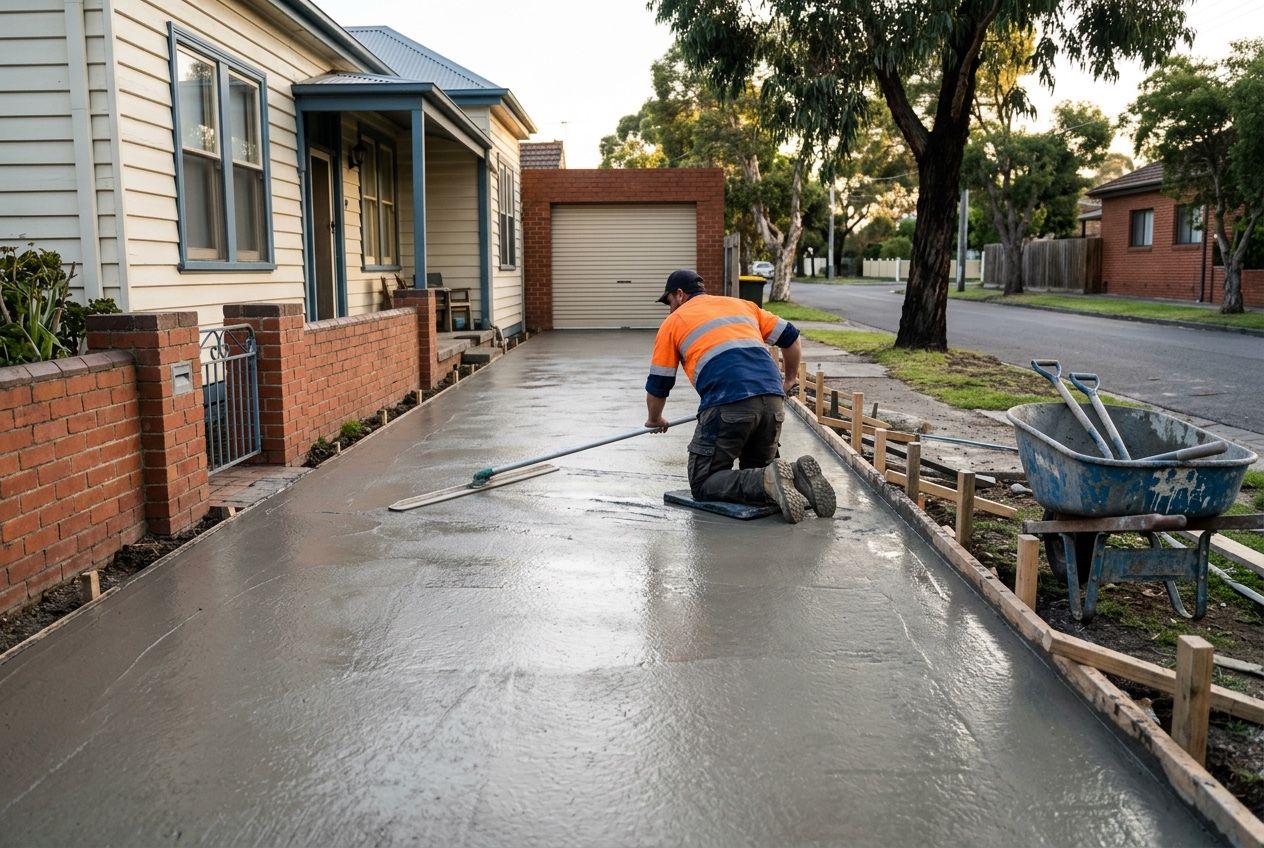
Every driveway finish compared, plus the crossover permit detail.
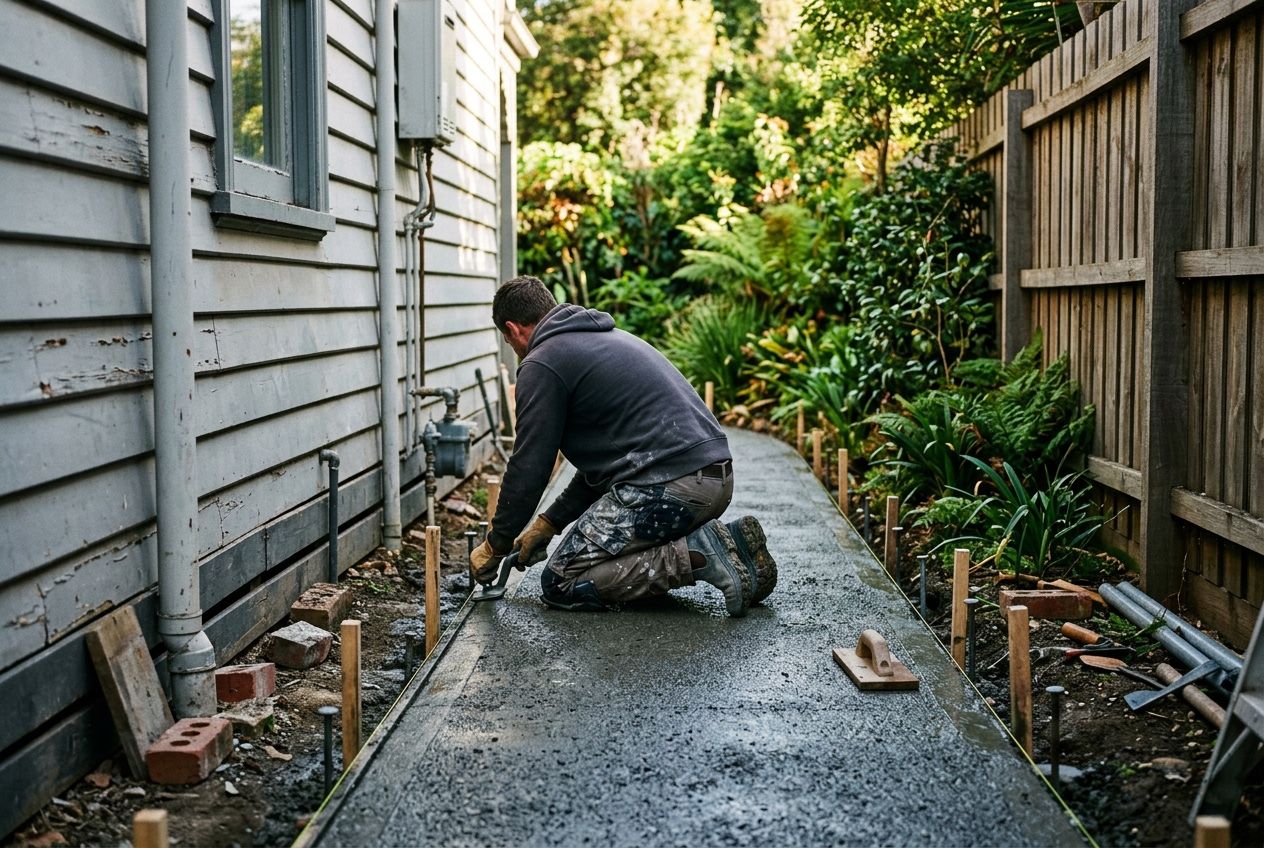
The smaller pours, in aggregate or any other finish.
Quoting exposed aggregate across the suburbs we service.
Exposed aggregate quotes across Coburg and the inner north, with blend samples on the table before you commit to anything.