
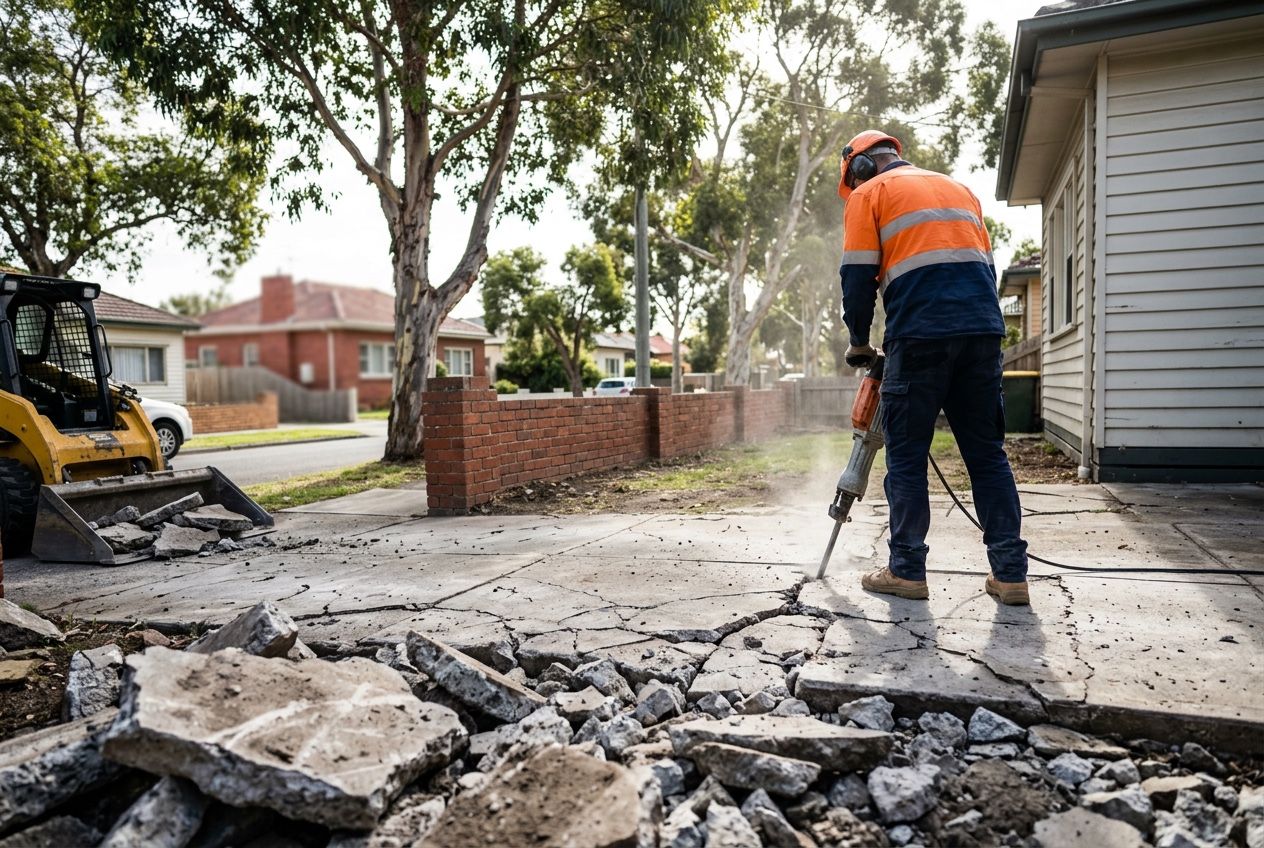
concrete removal and replacement
When the slab has failed and a coating would only crack with it.
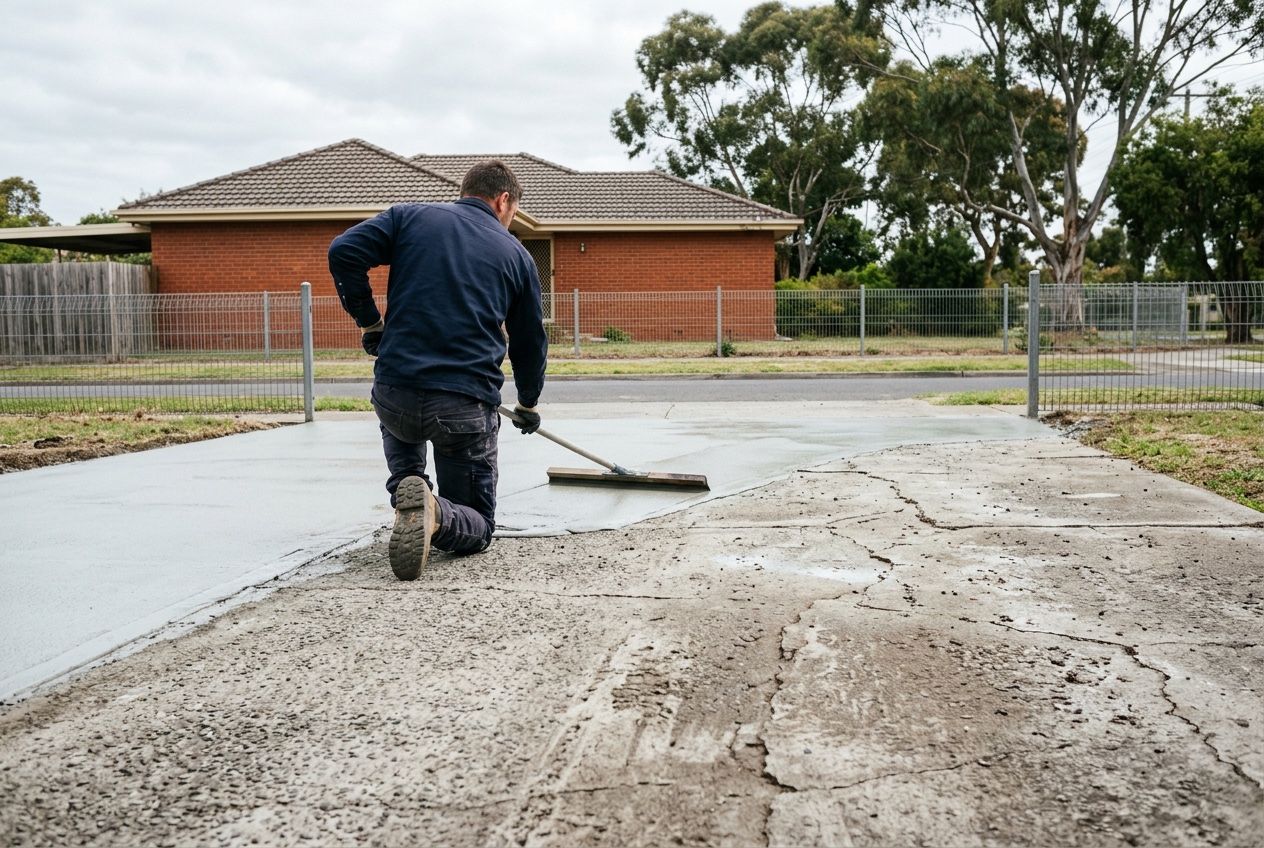
Concrete resurfacing gives Melbourne homeowners a way to make a structurally sound but tired driveway, path or patio look new for a good deal less than a full re-pour, quoted at homes across the inner north from a Coburg base. The catch is knowing when a surface is worth coating and when it is past it, and this page is straight about both.
Honest advice first, across Melbourne's inner north.
The driveway is stained, scaled and dated, but it is not actually broken, and that is what makes the decision hard. Ripping out concrete that still does its job feels like paying twice for the same slab. At the same time there are two real ways to get burned: getting talked into a full re-pour you never needed, or handing the money to someone whose cheap coating peels and flakes off inside two summers. Both happen. The point of this page is to be the straight answer to both, so you spend once on the fix the concrete in front of you actually needs, not the dearest job or the flimsiest one.
Resurfacing suits concrete that is structurally sound; replacement is the right call once the slab itself has failed. Resurfacing is the fix for surface trouble: general wear and scaling, discolouration and stains, minor crazing, a dated finish you want to modernise, and spalling confined to the top layer. It is the wrong fix, plainly, for a slab that is moving underneath. Cracks that keep opening, drummy or delaminating concrete that sounds hollow underfoot, heave from tree roots, panels that have sunk or rock under the car, and major cracks running clean across a panel are all base problems, not surface ones. An overlay laid over a slab that is still moving cracks straight back along the same lines within a season, so the money is wasted. There the honest fix is concrete removal and replacement, a fresh base and a new pour. Where a driveway is far enough gone that a full new one is the better spend, concrete driveways Melbourne covers the re-pour.
Concrete resurfacing covers the whole job from prep to sealer, not just the coat that shows. The surface is pressure-cleaned and ground back so the coating grips, then cracks and surface spalling get repaired before anything is laid, because a coating only ever looks as good as what is under it. From there a primer goes down, followed by the overlay system in your chosen colour and pattern: either spray on concrete, sprayed and trowelled to a stencil or texture, or a trowelled overlay worked over the whole surface. A sealer coat finishes it. The outcome is a surface that reads as newly poured for a fraction of a re-pour, with the existing levels and drainage left untouched. The coating brand comes down to what a local concreter runs, confirmed at quote rather than guessed at here.
Resurfacing here is residential work: driveways, paths, patios, pool surrounds and porches on homes and residential investment properties across Melbourne's inner north. Commercial car parks and warehouse floors are out, and so is polished-concrete interior flooring, which is a different trade with different gear. The local angle is simple and common: plenty of inner-north homes sit on their original driveway and paths, concrete that is perfectly sound underneath but cosmetically shot after decades of sun, oil and foot traffic. That is the exact candidate resurfacing was made for, a slab with good bones and a tired face. If the bones are gone, the section above is honest about pointing you the other way rather than coating over a problem.
This is where the resurface-or-replace call gets made honestly, on site, by looking at the actual slab rather than a photo.
Priced for your surface and the system it suits, once the slab has been checked over.
Pressure-clean, grind the surface back, and repair cracks and spalling so the coating has something sound to hold.
Primer down, then the overlay or spray coat, with any stencil or pattern work laid in while the surface is workable.
A sealer coat goes on, then the surface is left to cure and stays off-limits to traffic for a short window. Most residential driveways run a couple of days end to end, weather permitting, though that stays a typical, not a promise.
Resurfacing is priced per square metre and sits well under the cost of ripping a slab out and pouring a new one, going by published Australian concreting cost guides, compiled July 2026, and read as typical Melbourne prices incl. GST rather than a quote. That gap is the whole reason the decision higher up the page matters: spend resurfacing money onto a slab that has actually failed and you pay twice, once for the coat and again when it cracks and the concrete comes out anyway. What moves your number is the area, the condition of the surface and how much prep and crack repair it needs, and the overlay system chosen. The concrete cost per square metre guide sets resurfacing against every other finish by the metre, and the concrete driveway cost guide carries the full-replacement figures for the comparison.
Spray on concrete resurfacing is a thin cement-based coating sprayed and trowelled over existing concrete in a colour and pattern you choose, then sealed to lock it in. It renews the look of a sound slab without removing it, which is why it costs a fraction of a re-pour. The existing concrete stays put and does the structural work, while the coating handles the surface.
Concrete resurfacing is not worth doing when the slab underneath is moving: cracks that keep opening, drummy or hollow-sounding concrete, and panels that have sunk or rock under a car are all base problems. A coating laid over a moving slab cracks along the same lines within a season, so the money is wasted. In that case concrete removal and replacement is the honest recommendation.
Yes, exposed aggregate can be resurfaced, with one condition: the slab has to be structurally sound first. Because the stone gives a heavy texture, the surface usually needs grinding back to a flatter, more even profile before an overlay will key to it and sit true. Once the surface is prepped, a spray on or trowelled coating goes over exposed aggregate the same as it would over a plain slab.
Resurfaced concrete lasts a good many years when the prep is done properly and the surface is not hammered, though how long comes down to the coating system, the prep quality and the traffic it takes. A well-prepared residential overlay holds up for years, but wears faster than fresh concrete because it is a surface layer, not a full slab. Any workmanship warranty is confirmed with the concreter at quote.
Yes, isolated stable cracks in a concrete driveway can be filled and sealed on their own without coating the whole surface, and for a sound driveway that is often all it needs. The trade-off is that a repair stays visible: the filled line will not disappear. That is why plenty of homeowners pair crack repair with a full-surface coat when they want the driveway to look even again, rather than patched.
When the slab has failed and a coating would only crack with it.
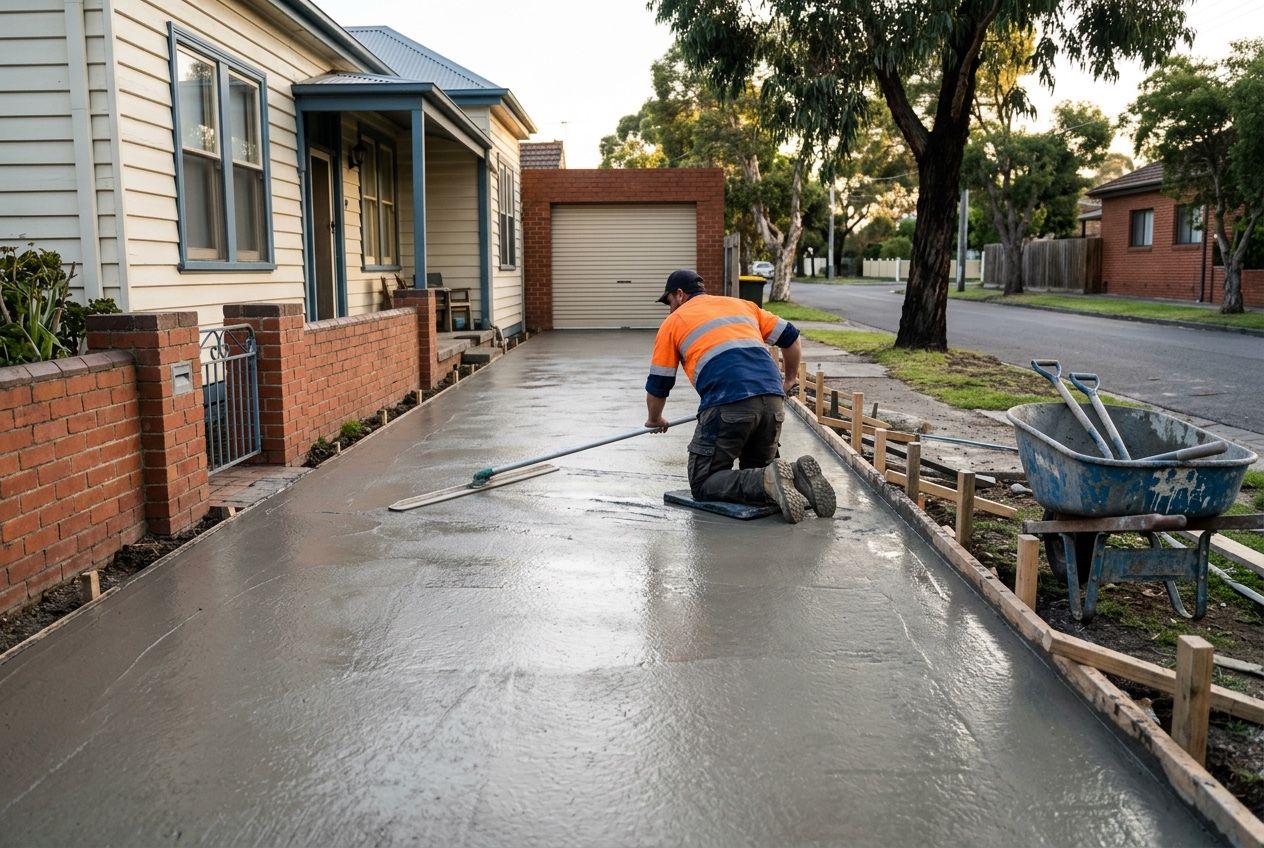
The full new-pour alternative when a driveway is past resurfacing.
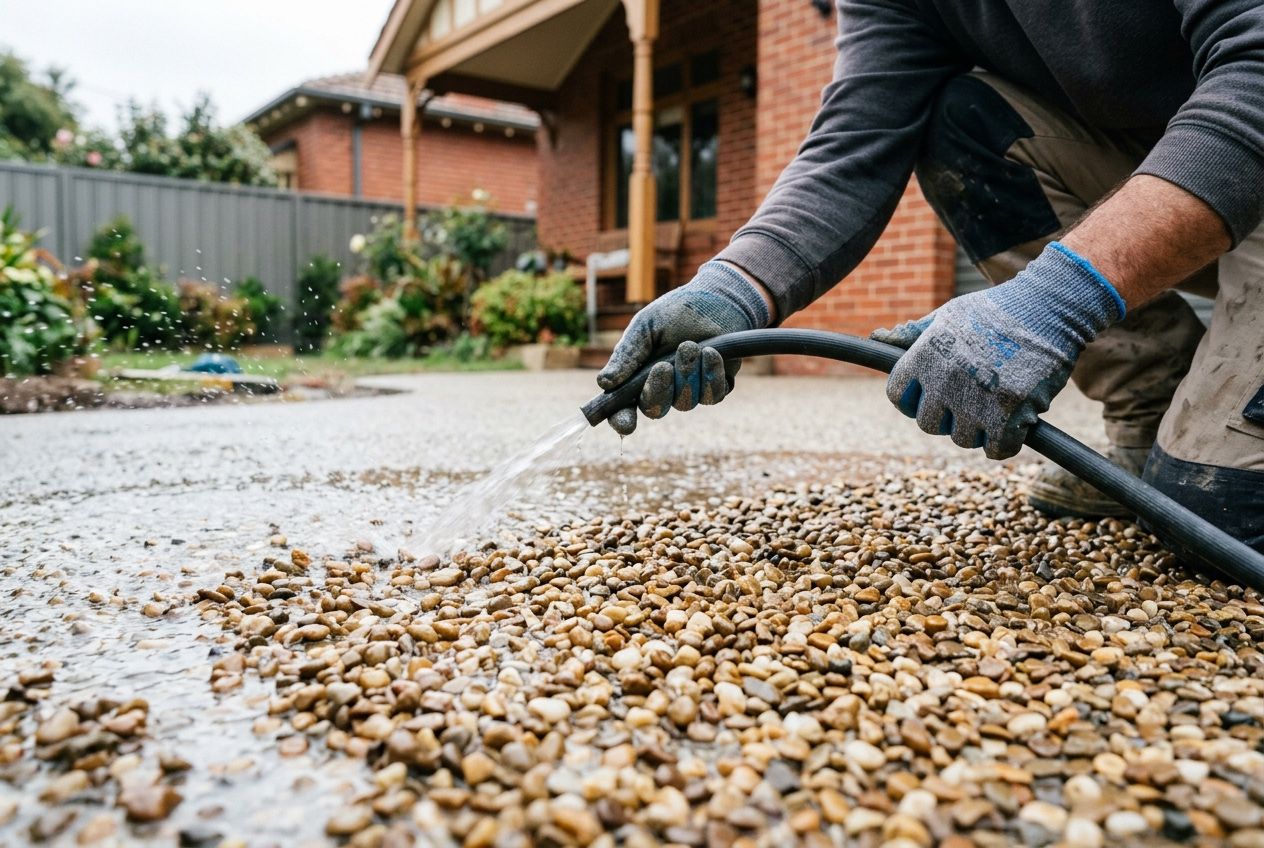
A decorative upgrade path when you are changing the look anyway.
Quoting resurfacing across the suburbs we service in the inner north.
Get a local concreter to look at the actual slab, tell you straight whether to coat it or replace it, and put the number in writing.